
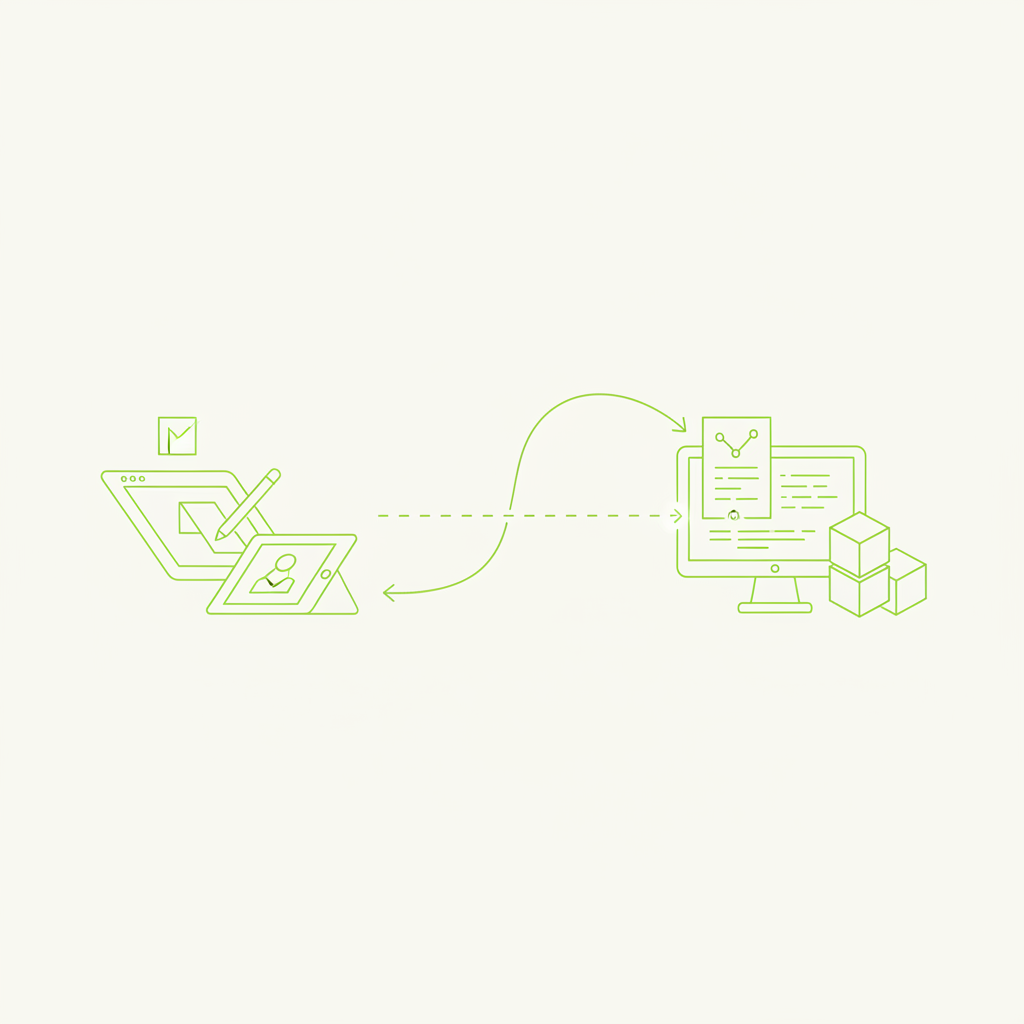
The design handoff is frequently viewed as a critical, albeit often cumbersome, milestone in the product development lifecycle. Historically, this juncture has involved the meticulous preparation of comprehensive specification documents, detailing every pixel, interaction, and behavioural nuance. While born from a desire for clarity, this approach frequently morphs into a ceremonial bottleneck, consuming valuable time and often failing to prevent misinterpretations in execution.
This perspective contends that the elaborate design specification is, in many contemporary product development contexts, an anachronism. In agile environments, where iterations are rapid and learning is continuous, static documents struggle to keep pace. They become outdated almost as quickly as they are finalised, leading to a disconnect between the 'official' design and the evolving reality of development. Furthermore, they foster a transactional rather than collaborative relationship between design and engineering, treating design as a deliverable to be passed over rather than a continuous input to be integrated.
The Case Against Comprehensive Spec Documents
The primary argument against extensive design specification documents rests on their inherent inefficiencies and the false sense of security they often provide. They are time-consuming to create, maintain, and digest. For designers, crafting these documents can divert focus from actual design problem-solving. For engineers, sifting through pages of static text and images can be a laborious process, often yielding less clarity than direct communication.
Moreover, these documents often fail to capture the dynamic nature of software development. Edge cases, technical constraints, and emerging requirements frequently necessitate adjustments post-handoff. When the primary source of truth is a static document, adapting to these changes becomes cumbersome, requiring further documentation updates and potentially leading to version control issues and confusion. The ambition to predict every permutation upfront, while understandable, is ultimately unrealistic and detrimental to agility.
Cultivating Shared Understanding Over Static Deliverables
The alternative to document-heavy handoffs is not an absence of process, but rather a shift in methodology. The goal remains the same – to ensure the developed product accurately reflects the intended design – but the means to achieve this prioritise continuous collaboration and shared understanding. This involves embedding design thinking throughout the development process, rather than isolating it as a distinct upstream phase.
True understanding emerges from dialogue, exploration, and joint problem-solving. When designers and engineers engage in a continuous conversation from conception to deployment, the need for exhaustive, formal documentation diminishes. Engineers become partners in shaping the solution, not merely implementers of a predetermined blueprint.
Practical Strategies for a Lean Handoff
To move beyond ceremonial handoffs, consider integrating these practical approaches into your product development workflow:
- **Embedded Designers:** Integrate designers directly into engineering teams. This proximity fosters daily interaction, allowing for immediate clarification, joint problem-solving, and continuous feedback. Designers become part of the 'build' process, not just the 'design' process.
- **High-Fidelity Prototypes as the Source of Truth:** Utilise interactive prototypes as the primary communication tool. These artefacts convey intent, interaction patterns, and user flows far more effectively than static mock-ups or written descriptions. Modern tools offer inspection modes that allow engineers to extract specifications directly.
- **Working Sessions Over Formal Meetings:** Replace lengthy handoff meetings with focused, collaborative working sessions. These can be design critiques with engineering input, technical feasibility discussions, or joint whiteboarding sessions to refine specific features.
- **Component Libraries and Design Systems:** A well-maintained design system, with clearly defined components and their usage guidelines, significantly reduces the need for repeated specification. Engineers can pull ready-made, coded components, ensuring consistency and accelerating development.
- **Annotated Design Files (Judiciously):** While comprehensive spec documents are discouraged, judicious annotations within design files themselves (e.g., in Figma, Sketch, or Adobe XD) can be highly effective. These should focus on critical interactions, states, or technical considerations that are not immediately obvious from the visual design.
- **'Walk-throughs' and 'Show-and-Tells':** Regularly scheduled sessions where designers walk engineers through the latest designs, explaining rationale and user flows, can be invaluable. Conversely, engineers can demonstrate work-in-progress, allowing designers to provide immediate feedback.
“The greatest value is not in the document itself, but in the conversation and shared understanding that its creation (or absence thereof) necessitates.”
Reframing the Role of Documentation
This approach does not advocate for a complete abandonment of documentation, but rather a re-evaluation of its purpose and form. Essential documentation, such as user stories, acceptance criteria, and technical architecture diagrams, retains its importance. However, the focus shifts from prescriptive design specifications to contextual information that supports autonomous decision-making and aligns understanding within the team.
Documentation should serve as a memory aid and a tool for onboarding, rather than the primary means of communication during active development. It should be lean, just-in-time, and easily accessible. The collective understanding and alignment fostered through continuous interaction are far more resilient and adaptive than any static document could ever be.
Measuring Success and Iterating the Process
The success of a lean handoff process can be measured not by the volume of documents produced, but by tangible outcomes: reduced re-work, fewer misunderstandings between design and engineering, faster feature delivery, and ultimately, higher quality products. Observe how quickly features move from design to development, and how frequently designers and engineers consult each other. Pay attention to the quality of implemented designs relative to their intent.
Like any process, the lean handoff is not a static solution; it requires continuous refinement. Gather feedback from both designers and engineers on what works well and what could be improved. Are there recurring points of confusion? Do certain types of features consistently require more detailed explanation? Use this feedback to iterate on your team's approach, adapting it to the specific needs and context of your projects.
Conclusion: A Cultural Shift
Moving away from ceremonial design handoffs is not merely a procedural change; it represents a significant cultural shift. It requires trust, open communication, and a shared commitment to quality and efficiency across the entire product team. By dismantling the artificial barriers erected by traditional documentation processes, organisations can foster more collaborative environments, empower their teams, and accelerate the delivery of impactful digital experiences. The focus shifts from 'what was documented' to 'what was understood and built together,' fostering genuine partnership and superior product outcomes.