In the fast-evolving landscape of product development, the traditional product roadmap often comes laden with an unspoken burden: the expectation of an unyielding promise. Stakeholders, both internal and external, frequently interpret a roadmap as a fixed blueprint, an unwavering commitment to deliver specific features by specific dates. This perception, while understandable, fundamentally misrepresents the dynamic reality of modern product creation. At DesignCyclein, we advocate for a more nuanced perspective: viewing roadmaps as strategic bets, not unbreakable promises.
This shift in mindset is not merely semantic; it’s foundational to building healthier product organisations, fostering realistic expectations, and ultimately, delivering more impactful products. The challenge lies in communicating this inherent uncertainty without eroding trust – a delicate balance that requires clarity, transparency, and a commitment to continuous dialogue.
The Peril of Promises: Why Roadmaps Break
When roadmaps are treated as promises, they become brittle. Software development is an iterative process rife with discovery, learning, and unforeseen challenges. New market insights emerge, user feedback uncovers critical needs, technological hurdles appear, and competitor moves necessitate strategic pivots. Attempting to adhere rigidly to a pre-defined plan in the face of such dynamism leads to several detrimental outcomes:
- **Erosion of Trust:** When committed features are delayed or deprioritised, stakeholders feel let down, perceiving a broken promise rather than a necessary adaptation.
- **Loss of Agility:** Teams become reluctant to pivot or explore better solutions for fear of deviating from the 'plan', stifling innovation and critical thinking.
- **Burnout and Pressure:** Developers and product managers are forced to cut corners or work unsustainable hours to meet unrealistic deadlines, leading to compromised quality and low morale.
- **Misguided Investment:** Resources are poured into features that may no longer be the highest impact, simply because they were 'on the roadmap'.
The very act of promising certainty in an uncertain environment is a setup for failure. Instead, we must embrace uncertainty as an inherent part of the journey and build communication strategies that reflect this reality.
Roadmaps as Bets: A New Paradigm
A roadmap is a hypothesis. It’s our best guess at how to achieve a desired outcome, given current knowledge. It’s an exploration, not a decree.
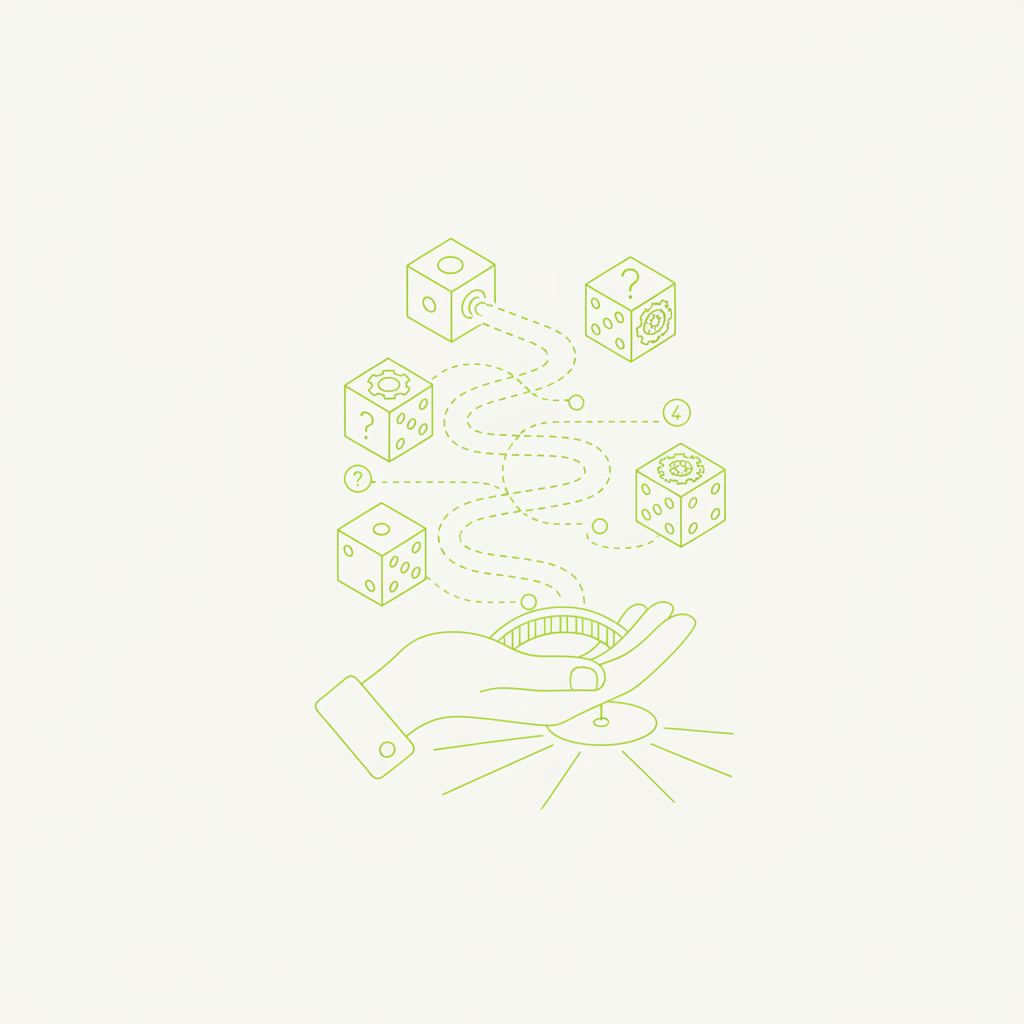
Framing roadmaps as bets fundamentally alters their purpose and the way they are discussed. A bet implies a calculated risk, a desired outcome, and an understanding that the initial approach might need adjustment based on new information. When you articulate a roadmap as a series of bets, you are implicitly stating:
- **We have a clear objective:** Each 'bet' is tied to a specific business problem or user need we aim to solve.
- **We have a hypothesis:** We believe this approach (feature, initiative) is the most effective way to achieve that objective.
- **We will validate this hypothesis:** We’ll build, measure, and learn, and be prepared to adapt based on what we discover.
- **There is inherent risk and uncertainty:** Success is not guaranteed, and the path may change.
Communicating Uncertainty Without Losing Trust
This is where the art of product management truly shines. Communicating uncertainty effectively isn't about being vague; it's about being strategically transparent. Here’s how product teams can cultivate trust while managing expectations:
1. **Focus on Outcomes, Not Outputs:** Instead of listing features, articulate the problems you are solving and the desired business or user outcomes. "We are investing in improving user retention by 10%" is a more powerful and adaptable statement than "We are building Feature X and Feature Y."
2. **Define Horizons of Certainty:** Segment your roadmap into distinct horizons with varying levels of detail and commitment. For instance:
- **Now (0-3 months):** High confidence, detailed epics/stories, committed work.
- **Next (3-6 months):** Medium confidence, themes or larger initiatives, some flexibility expected.
- **Later (6+ months):** Low confidence, strategic areas of exploration, highly fluid.
Clearly communicate that the further out an item is, the less concrete it is, and the more likely it is to change.
3. **Embed Decision Points and Trade-offs:** Be explicit about key decisions that need to be made and the trade-offs involved. For example, "If user research reveals X, we will pivot from Y to Z." This shows proactive thinking and involves stakeholders in the strategic journey.
4. **Emphasise 'Why' Over 'What':** When discussing changes or delays, always start with the 'why'. "We're pausing Feature A because user feedback highlighted a more critical need for Feature B, which impacts our key retention metric." This shifts the conversation from a broken promise to a logical, data-driven decision.
5. **Regular, Transparent Communication:** Don't wait for problems to arise. Establish a rhythm of regular updates. Share successes, learnings, and challenges. Demonstrate how you are using new information to refine the roadmap. Use visual aids that represent flexibility, like now/next/later roadmaps or theme-based roadmaps, rather than Gantt charts.
6. **Educate Stakeholders:** Proactively educate stakeholders on the nature of product development and the role of the roadmap. Help them understand that change is a sign of responsiveness and smart adaptation, not incompetence. At DesignCyclein, we often run workshops to align internal teams on these principles.
Building Trust Through Predictable Communication
Trust isn't built on rigid adherence to a flawed plan; it's built on consistent, honest, and transparent communication. Stakeholders understand that circumstances change, but they appreciate being kept informed and feeling part of the strategic journey. When you communicate the 'bet' and the rationale behind it, even if the outcome isn't what was initially expected, they are more likely to see it as a shared learning experience rather than a personal failing.
By shifting the conversation from a fixed delivery schedule to a strategic exploration of opportunities and challenges, product teams can empower themselves to make better decisions, foster innovation, and build stronger, more resilient relationships with all parties involved. This approach transforms the roadmap from a source of anxiety into a dynamic tool for strategic alignment and continuous value delivery, a cornerstone of DesignCyclein’s product philosophy.